When we say "home insurance" or "homeowners insurance," we're referring to House & Property insurance.
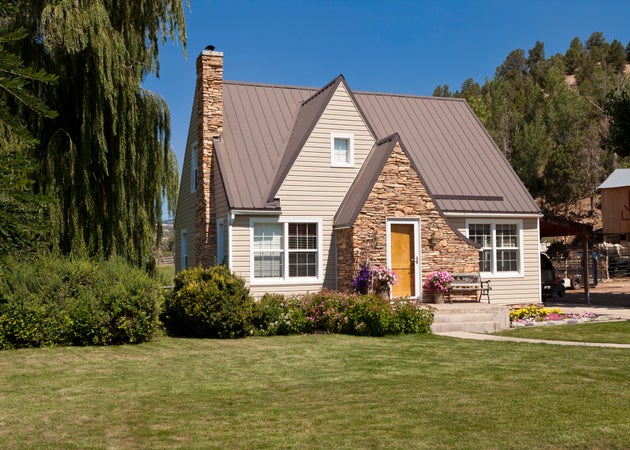
Oklahoma sits at the crossroads of some of the country's most volatile weather. The state ranks third nationally for tornado frequency, averaging nearly 65 per year. Add hail, flash flooding, and wildfire risk to the mix, and the financial consequences for homeowners can be significant. According to Climate Central and data from the National Oceanic and Atmospheric Administration (NOAA), Oklahoma has been affected by 115 billion-dollar weather disasters since 1980 — and the pace is accelerating.
That threat is reflected directly in the cost of home insurance coverage here. Oklahoma homeowners face some of the highest average home insurance premiums in the country. The good news is that the right coverage can help you avoid a devastating financial hit when severe weather strikes. Understanding what your policy covers, what it does not, and how to close the gaps are the most important steps you can take to protect your home and your finances.
Oklahoma home insurance requirements
Oklahoma law doesn't require homeowners to carry property insurance, but mortgage lenders do. As home insurance costs continue to climb, that lender requirement is becoming a real barrier — making it harder for some Oklahomans to buy a home or hold onto one they already own.
Lender requirements include the so-called “80% rule” for residential home insurance, which requires homeowners to maintain dwelling coverage at 80% or more of the home’s replacement value. Failure to purchase enough dwelling coverage results in diminished payouts in the event of an insurance claim and could leave homeowners seriously underinsured.
Lenders typically require homeowners to carry enough coverage to rebuild their home — generally at least 80% of what it would cost to reconstruct it from the ground up. Fall short of that threshold and your insurance payout gets reduced if you file a claim, which can leave you stuck covering a significant chunk of the bill yourself.
One thing worth knowing: your home's rebuild cost isn't the same as what you could sell it for today based on the current real estate market. Market value factors in your land, your neighborhood, school districts, and curb appeal. Rebuild cost (often referred to as replacement cost) is more straightforward. It's based on the size of your home, its construction style, and the cost of materials and labor in your area. Things like custom cabinetry, high-end countertops, and flooring all factor in, too.
How does homeowners insurance work in Oklahoma?
This short video walks you through how to get a quote and what insurance covers. Click a topic on the video to jump straight to what matters most to you.
Understanding your Oklahoma insurance coverage
All standard home insurance policies in Oklahoma include six basic types of coverage.
Dwelling coverage (Coverage A)
What it covers: Dwelling coverage covers the cost to repair or rebuild your home’s main structure, including built-in systems (e.g., HVAC and plumbing) and permanently installed features (e.g., cabinets and countertops), as well as attached garages.
How much you need: Aim to cover the full cost to rebuild your home. The 80% minimum is a lender requirement, but covering the full rebuild cost gives you the most protection.
Trends to watch in Oklahoma: Residential construction costs have seen steep increases in Oklahoma in recent years thanks to an increase in building materials prices, driven in part by tariffs and a shortage of skilled laborers. Ask your insurer about an inflation guard clause that can help make sure your insurance coverage keeps pace with market shifts.
Other structures coverage (Coverage B)
What it covers: Other structures coverage helps pay for damage to detached structures on your property, such as detached garages, fences, and storm shelters.
How much you need: Policy limits are typically set at 10% of your dwelling coverage limit. Consider the cost to replace or rebuild your detached structures and ask about a higher limit if necessary.
Trends to watch in Oklahoma: Rising construction costs also impact other structures coverage. Carefully assess what’s on your property and local material and labor trends to determine an appropriate coverage amount. A licensed insurance agent can help.
Personal property coverage (Coverage C)
What it covers: Personal property or contents coverage helps pay to replace your belongings, such as clothing, furniture, electronics, and more.
How much you need: Standard limits start around 50% of your dwelling coverage amount, with lower sublimits for high-value items like jewelry, art, bicycles, and sporting equipment. Consider adding a scheduled personal property endorsement to extend these sublimits to match the exact value of your belongings.
Trends to watch in Oklahoma: Personal property is typically covered on an actual cash value (ACV) basis, meaning that your policy covers the depreciated value of your belongings at the time of loss— not what it would cost to buy them new. After a major loss like a tornado, that difference can leave you with a payout that falls well short of what you need to replace everything. Ask about upgrading to replacement cost coverage, which pays what it actually costs to replace your stuff today.
Loss of use coverage (Coverage D)
What it covers: Loss of use or additional living expenses (ALE) coverage can help pay for qualifying expenses you incur on top of your routine living costs if you’re temporarily displaced from your home due to a covered claim.
How much you need: ALE coverage limits typically start around 30% of your dwelling coverage limit.
Trends to watch in Oklahoma: Check the time limits that apply to your loss of use coverage. In the event of a total loss due to a tornado or other storm, you could be displaced from your home for a year or more. Knowing your limits ahead of time means no surprises if you end up needing to use this coverage for an extended period.
Liability and medical payments coverage (Coverages E & F)
What it covers: Personal liability coverage (Coverage E) pays for medical bills and property repairs or replacement, along with any legal costs you may incur, if you or someone in your household is responsible for someone else’s injury or property damage. Medical payments (Coverage F) can help cover medical bills for other parties if they’re injured on your property, regardless of fault.
How much you need: Personal liability coverage limits typically range from $100,000 to $500,000 per occurrence. Medical payments limits typically range from $1,000 to $5,000 per person per occurrence.
Trends to watch in Oklahoma: Like other states, Oklahoma has seen a rise in so-called "nuclear verdicts" — jury awards in personal injury cases that run into the millions. Take the risk of an unexpected lawsuit seriously and consider how much coverage you'd need to protect your assets and future income.
Perils and exclusions: What is covered in Oklahoma?
What your Oklahoma home insurance policy covers — and what it won’t cover — is defined by whether you have named-perils or open-perils coverage. In insurance, a “peril” is simply a cause of loss, or something that damages your property. The most common covered peril is fire, along with lightning, wind, and hail.
-
Named perils: Only the perils listed specifically in your policy are covered.
-
Open perils: All perils are covered except those specifically listed as exclusions in your policy.
Most standard homeowners insurance policies in Oklahoma are HO-3 (Special Form) policies, which cover your dwelling and other structures on an open perils basis and your personal property on a named perils basis. For a higher premium, you can request an HO-5 (Comprehensive) policy, which covers all of your property on an open perils basis.
The 16 most common named perils for home insurance in Oklahoma are:
-
Fire or lightning
-
Windstorm or hail
-
Smoke
-
Theft
-
Vandalism
-
Falling objects
-
Explosion
-
Riots
-
Aircraft
-
Vehicles
-
Weight of ice, snow, or sleet
-
Accidental discharge or overflow of water or steam
-
Sudden and accidental tearing, cracking, burning, or bulging
-
Freezing
-
Sudden and accidental damage due to short circuiting
For both named and open perils coverage, some of the most commonly excluded perils are:
-
Flooding: Rising water from flash floods and spring storms is explicitly excluded from all standard home insurance. To cover this peril, you’ll need a separate flood insurance policy.
-
Earthquakes: All forms of earth movement, which includes earthquakes, landslides, and mudslides, are explicitly excluded from home insurance. In areas like central Oklahoma with a history of seismic activity, earthquake insurance may be available as a standalone policy or an add-on for your primary home insurance.
-
Nuclear threat and war: A policy add-on is not available to broaden your home insurance policy to cover these incidents.
-
Termite damage: Oklahoma homeowners should read their policy carefully to understand if termite damage is excluded. Much of Oklahoma is in a moderate to heavy termite infestation probability (TIP) zone, making termite damage a common occurrence for homeowners. However, most policies exclude all damage caused by termites, since pest damage is classified as a maintenance issue rather than a sudden and unexpected loss.
Oklahoma insurance laws and consumer protections
Historically, Oklahoma homeowners haven't had a lot of help from the regulatory side when it comes to reining in insurance costs. That's starting to change. In recent years, state lawmakers and the Oklahoma Insurance Department have taken steps to give homeowners more protection, more transparency, and more tools to manage rising costs.
-
Strengthen Oklahoma Homes grants: The Strengthen Oklahoma Homes program offers grants of up to $10,000 to help homeowners cover the cost of upgrading to a FORTIFIED roof — a storm-resistant roofing standard developed by the Insurance Institute for Business and Home Safety (IBHS). Grants are paid directly to the contractor once the work is complete and certified. Pilot program participants have saved an average of $750 per year on insurance premiums after upgrading, and the program opened statewide in January 2026.
-
Rate review before increases take effect: Signed into law in May 2026, House Bill 3781 requires insurance companies to submit proposed rate changes to the Oklahoma Insurance Department for review before they can take effect — a significant shift from the previous system, where carriers could raise rates first and notify the state afterward. The law takes effect July 1, 2027, and requires proposed rate increases for homeowners policies to be posted publicly, giving Oklahomans more visibility into what's driving their premiums.
Additional home insurance coverage to consider in Oklahoma
To broaden the coverage offered by standard policies, Oklahoma homeowners may want to consider certain add-ons (called endorsements).
Endorsements add, extend, or modify coverage. The options listed below may be especially impactful in Oklahoma.
Water backup and sump pump overflow
During heavy spring rain cycles, the rapid accumulation of water can cause sewer backups and overwhelm sump pumps, leading to flooding. This type of water damage is specifically excluded from standard home insurance policies; you’d need a special water backup endorsement to add coverage.
Service line coverage
In aging metro neighborhoods like those in Oklahoma City and Tulsa, it’s not unusual to see outdated plumbing and underground utility lines fail. When it happens on your property, it can cause damage to your home and be costly to repair — but even though the line might be municipal property, you’ll be responsible for the cost of excavation, repairs, and cleanup. Service line coverage is often available as an endorsement to help pay these costs if you’re unlucky enough to need it.
Equipment breakdown coverage
Summer in Oklahoma is hot. For homeowners, this means reliance on an increasingly strained energy grid groaning under the exertion of thousands of HVAC systems. If your local power grid fails during a heat wave, a power surge can occur when the electricity turns back on — and damage your home equipment, including appliances and electronics.
Equipment breakdown coverage covers this and certain other sudden, unexpected mechanical failures in your home. Read the language of any equipment breakdown endorsement carefully and compare it to home warranty offers. These products typically cover different equipment against different causes of damage, so choose the one that fits your needs best.
Earthquake insurance
Home insurance doesn’t cover earthquake damage, but earthquakes still happen — including in Oklahoma’s central corridor. If you live in an area with historical seismic activity, it’s worth looking into an earthquake endorsement to extend your home insurance coverage to earthquake-related damage.
Be aware that earthquake insurance often comes with a very high deductible, so make sure you understand all the costs you’re responsible for before adding this to your policy.
The cost of home insurance in Oklahoma
Oklahoma’s average home insurance rates are among the nation's highest. Recent data from the Consumer Federation of American found that homeowners in Oklahoma paid an average of $5,819 in 2024 for $350,000 in dwelling coverage — well above the national average of just $3,303.
This average doesn’t mean that every homeowner in Oklahoma can expect to pay over $5,000 per year for home insurance. Home insurance pricing is complex and unique to each home and homeowner. Factors that may influence your rate include:
-
The amount of dwelling coverage your home needs
-
The distance between your home and the nearest fire station or hydrant
-
The type of electrical wiring in your home
-
The type of plumbing in your home
-
Whether or not anyone living in your home smokes
-
The number of insurance claims you’ve filed in the past
-
Your credit history
Regional risk factors do mean that homeowners in certain parts of Oklahoma are more likely to face high home insurance rates. Oklahoma City, for instance, often has the highest average premiums in the nation (averaging over $9,000 for high-value homes) thanks to the combination of climate risks it faces, including tornadoes, wildfire, and flooding. Smaller towns and areas with less volatile weather patterns may see lower premiums overall.
Tornadoes, hail, and the Oklahoma roof landscape
Most Oklahoma home insurance policies have a separate deductible for storm damage, including damage caused by hail and tornadoes. A deductible is the amount of damage you agree to cover out of pocket. Unlike a standard flat deductible (say, $1,000), storm deductibles are typically set at 1% to 2% of your total dwelling coverage amount. On a home insured for $500,000, that's $5,000 to $10,000 you'd owe before your policy covers the rest — and on higher-value homes, that number climbs further.
Why are storm deductibles so high? It’s a means of sharing the risk associated with highly destructive storms in Oklahoma’s Tornado Alley, which may cause devastating damage to multiple homes in a single area. Because this places an enormous financial drain on insurers, high deductibles pass some of the risk on to homeowners, meaning that home insurance can only be used for truly catastrophic damage.
The good news: Oklahoma lawmakers and insurers are introducing new ways for homeowners to offset the high costs associated with storms. In 2025, lawmakers passed a bill with new licensing requirements for roofing contractors to fight back against fraud by “storm chasers.” Insurance companies may also offer discounts as high as 30% to homeowners who upgrade to Class 4 impact-resistant shingles.
Mitigation and the Strengthen Oklahoma Homes program
The Strengthen Oklahoma Homes program offers industry-funded grants to homeowners who obtain a FORTIFIED Home Roof High Wind designation with the Hail Supplement from IBHS. Thanks to a recent expansion in funding, the maximum amount available for each grant is $10,000.
In addition to funding actual upgrade costs, Oklahoma law now requires insurance companies to award premium discounts to homeowners whose roofs earn a FORTIFIED certification. These discounts apply only to the wind and hail portion of the policy, but they can reduce your overall costs.
In order to meet FORTIFIED standards and earn the necessary certification, your roof must:
-
Use 8D ring-shank nails, which have a ridged shank instead of a standard smooth one, to strengthen your roof’s attachment to the house frame
-
Have a sealed roof deck to reduce water intrusion
-
Use specific materials and methods to lock down the edges of the roof, reducing its ability to rip away from the home
-
Have impact-resistant shingles or other roof coverings rated “Good” or “Excellent” by IBHS
-
Include attic vents designed to resist wind and rain
How to save on your Oklahoma home insurance premium
To potentially reduce your home insurance costs, consider some of the following strategies:
-
Ask about discounts: You can earn home insurance discounts by bundling home and auto insurance, installing home security systems, making wind mitigation upgrades, or even by opting for electronic policy documents. Ask your current insurer about your options and consider switching to a carrier with more available discounts.
-
Adjust your deductible: Opting for a higher deductible on your home insurance can help offset rate hikes by taking on a larger share of the risk associated with claims. Just be careful not to raise your deductible so high that you can’t afford to pay it in the event of a covered loss.
-
Shop around: As Oklahoma insurers adjust to the state’s new normal and respond to ongoing legislative changes, the premiums you’re eligible for from any given insurer could fluctuate significantly. Switching companies may be a way to reduce your costs.
Frequently asked questions about Oklahoma home insurance
What’s the average cost of home insurance in Oklahoma?
Homeowners in Oklahoma pay an average of $5,819 per year for $350,000 in dwelling coverage, according to the Consumer Federation of America. In its analysis, Oklahoma was one of just three states — along with Florida and Louisiana — where the average price of homeowners insurance is over $5,500 per year.
What is the Oklahoma FORTIFIED roof grant for 2026?
The Strengthen Oklahoma Homes program is offering grants up to $10,000 for homeowners who upgrade to a FORTIFIED roof in 2026. In order to qualify, applicants must be evaluated by a Certified FORTIFIED Evaluator to see if their home meets eligibility requirements for the hail and wind mitigation modifications required for a FORTIFIED roof. You’ll also need a homestead exemption, proof of insurance, and proof of income.
What is the 80/20 rule for home insurance?
The “80/20” or “80% rule” for home insurance refers to the requirement by some insurers that policyholders maintain dwelling coverage on their home equal to at least 80% of the home’s replacement cost. If you purchase a policy with dwelling coverage that’s less than 80% of the cost to rebuild your home, your payout will be reduced proportionally in the event of an approved claim.
Remember that replacement cost is not equal to your home’s market value. Instead, it’s calculated based on the cost of construction materials and labor in your area along with your home’s size and features.
What is the 2026 Homeowner Claims Bill of Rights?
The 2026 Homeowner Claims Bill of Rights (OK HB2933) is proposed legislation in Oklahoma that would define new policyholder rights, establish timelines for home insurance claims, and require insurance companies to share this information publicly. As of June 2026, the bill was passed by the House and is being reviewed by the Senate.
Why is Oklahoma homeowners insurance so high?
Oklahoma homeowners insurance rates are so high due to a regulatory environment that has historically given insurers flexibility on rate-setting and increasing severe weather risks, including storms and tornadoes. As billion-dollar disasters devastate communities across the state and put growing financial strain on insurer’s budgets, insurers seek relief by raising customers’ premiums.


