When we say "home insurance" or "homeowners insurance," we're referring to House & Property insurance.
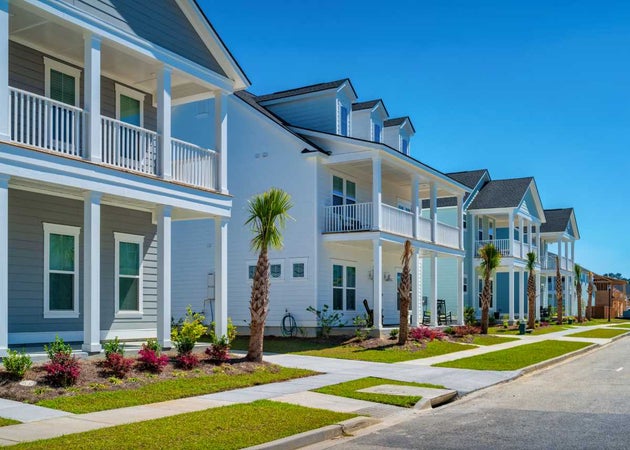
From the historic Battery in Charleston to the Blue Ridge foothills farther north, South Carolina is a geographically diverse state with several extreme weather risks, including hurricanes, earthquakes, and tornadoes. That makes home insurance in South Carolina a crucial safety net, particularly for homes at risk of damage from Atlantic storms.
South Carolina home insurance requirements
South Carolina state law does not require you to carry home insurance, but if you have a mortgage on your property, it’s likely that your lender does. If you don’t secure coverage on your own, your lender may purchase a force-placed insurance policy for you. This is more expensive than coverage you could get with a private insurer, yet it offers fewer protections for you as the homeowner.
Simply put, if you have a mortgage, getting your own policy is the smarter move. And even if you own your home outright and don’t have to have a policy, carrying home insurance in South Carolina is one of the best ways to protect the financial investment you’ve made in your home.
Living near the coast adds another layer of complexity. In high-risk coastal areas, some homeowners find that private insurance companies won't cover wind and hail damage — or will only offer coverage at prices that feel unaffordable. That's where the South Carolina Wind and Hail Underwriting Association (SCWHUA), commonly called the South Carolina Wind Pool, comes in. It's a state-backed program designed to make sure coastal homeowners can still get wind and hail coverage when the private market won't help. That said, Wind Pool coverage tends to be limited and more expensive than what you'd get from a private insurer, so it should be a last resort rather than a first choice.
How does homeowners insurance work in South Carolina?
This short video walks you through how to get a quote and what insurance covers. Click a topic on the video to jump straight to what matters most to you.
What does a standard South Carolina home insurance policy cover?
Standard home insurance in South Carolina includes coverage for your primary dwelling and other structures on your property. In addition, policies typically cover your belongings, liability, and more. Here’s a breakdown of what's included in most policies.
Dwelling coverage (Coverage A)
Dwelling coverage is the most important part of your home insurance policy. It provides coverage for the actual structure of your home. That includes elements such as the foundation, walls, roof, and built-in systems.
How much dwelling coverage you need depends on what it would cost to fully rebuild your home from the ground up, based on current material and labor costs. This figure — called your home’s replacement cost value (RCV) — differs compared to the amount you could sell your home for (that’s its market value). You can work with an insurance agent or an independent South Carolina home appraiser to estimate the most accurate RCV for your home.
Other structures (Coverage B)
A standard South Carolina home insurance policy also includes other structures coverage. This covers structures that aren’t attached to your actual home, which might include:
- Detached garages
- Sheds
- Gazebos
- Fences
Personal property coverage (Coverage C)
Personal property coverage is what protects you against financial loss should any of your belongings get stolen or damaged. This typically includes coverage for:
- Furniture
- Electronics
- Clothing and jewelry
- Toys and collectibles
- Artwork and decor
- Kitchenware
A typical home insurance policy covers personal property at actual cash value (ACV), which means your payout reflects what your belongings are worth today — not what you originally paid for them. The value of a five-year-old laptop, for example, has gone down over time. This is called depreciation, and your payout would reflect that reduced value.
If that feels like a risk, you can upgrade to replacement cost value (RCV) coverage. With RCV, your insurer pays what it would actually cost to replace a stolen or damaged item with a new equivalent — depreciation is not factored in. It typically costs a bit more to carry RCV coverage for personal belongings, but it can make a significant difference in a large claim.
Loss of use (Coverage D)
In the event of extensive damage that requires you to temporarily vacate your home while repairs are completed, loss of use coverage (sometimes called additional living expenses) can help pay for your living expenses, such as hotel stays and meals out.
Personal liability and medical payments coverage (Coverages E & F)
If someone gets injured on your property, or if you or a member of your household damages someone else’s property, personal liability coverage can help pay for your legal costs and settlements if you are sued.
Your policy also likely includes medical payments coverage, which provides a small amount of money to cover medical costs should a guest get injured on your property. Most policies set this limit somewhere between $1,000 and $5,000 — enough to cover a minor emergency room visit or some follow-up care, but not a major injury. Ideally, this coverage can help you avoid lawsuits altogether.
Common causes of damage: What’s covered and what’s not
Your homeowners insurance policy will help pay for repairs and replacements when damage stems from a covered peril — insurance-speak for any event that causes damage or loss, like a fire, storm, or theft. In South Carolina, home insurance policies often use:
-
Open-peril coverage for your dwelling and other structures. This means damage from any cause of loss is covered, unless it’s specifically excluded by your policy.
-
Named-peril coverage for personal property. This means losses are only covered if the cause of damage is specifically listed in the policy.
Perils typically covered in South Carolina
Understanding how your policy is structured matters because not every threat is treated the same way. Here's a look at the most common causes of damage South Carolina homeowners face and how your policy typically responds to each.
Fire and lightning
Damage from fire and lightning are both covered under standard South Carolina homeowners insurance.
While South Carolina doesn’t face extremely high fire threats like states in the West, fires can still be a problem in the Palmetto State. On average, nearly 1,400 wildfires occur here a year, burning 20 to 30 homes, according to the South Carolina Forestry Commission.
Lightning is also a factor — South Carolina ranks 10th in the nation for most hours of thunderstorm activity, according to data from Advanced Environmental Monitoring. Only 2% of SC fires are ignited by lightning strikes, but the frequency of storms still creates a real risk for homeowners.
Wind and hail
Tropical storms and hurricanes can cause severe wind damage along the South Carolina coast, making it difficult for some coastal homeowners to find wind coverage through a private insurer. The South Carolina Wind Pool exists for exactly this situation — it's an association of insurers that extends coverage to those who can't get it elsewhere. Nearly all coastal homeowners are eligible, but coverage is more restrictive and premiums are higher than what you'd find on the private market, so treat it as a last resort.
Wind and hail don't stop at the coast — storms can cause serious damage to inland homes, too. While South Carolina is not officially a part of Dixie Alley, the state borders this tornado-heavy region. In fact, South Carolina averages 23 tornadoes a year, per the South Carolina Emergency Management Division (SCEMD). Based on tornado data from the last 75 years, the bulk of the most destructive tornadoes (particularly those classified as E4s) have hit the northern and western parts of the state.
A note on deductibles: A deductible is the portion of a covered loss you're responsible for paying — your insurer covers the rest, up to your policy limits. Most claims are subject to a flat dollar amount, like $1,000 or $2,500. But policies for coastal South Carolina homes often have a separate hurricane deductible that works differently. Instead of a flat amount, it's calculated as a percentage of your dwelling coverage — usually 1% to 5%, though it can go as high as 10%.
Theft and vandalism
A report from Consumer Affairs ranks South Carolina 13th in the nation for burglaries. Fortunately, theft and vandalism are both covered by a standard homeowners insurance policy.
Common exclusions in South Carolina
Standard policies have several notable homeowners insurance exclusions. Here are some of the most common.
Flooding
Damage from floods is not covered by standard home insurance policies. Homeowners have to add flood coverage as an endorsement (meaning an optional add-on) or purchase a separate flood policy.
Flood coverage is critical given South Carolina’s risk. Storm surges are common following hurricanes and tropical storms, but again, inland homeowners aren’t off the hook since thunderstorms are common throughout the state. According to the SCEMD, South Carolina’s “low-lying topography” and “humid subtropical climate” put the state at a heightened risk of flooding, especially in areas close to rivers.
Earthquakes
Earthquakes are most common in South Carolina’s coastal plain, with past seismic activity clustered around three areas:
- Ravenel-Adams Run-Hollywood
- Middleton-Place-Summerville
- Bowman
Notably, the Ravenel-Adams Run-Hollywood location means homeowners in Charleston — the state’s most populous city — face earthquake risk. Earthquake damage is not typically covered by standard SC home insurance.
Wear and tear
Home insurance does not cover general wear and tear. If your roof fails over time, for instance, that’s a maintenance issue, and you’ll have to pay out of pocket to replace it.
Pest damage
Insurers treat damage from pests similarly — maintaining a pest-free home is the homeowner’s responsibility. If pest damage occurs, it’s usually not covered. This is especially noteworthy in South Carolina, where the humid climate is a prime habitat for termites.
Additional home insurance coverage to consider in South Carolina
Homeowners in South Carolina face a unique set of risks that are often excluded from standard home insurance policies. The coverages below can help fill in the gaps, though each one will add to your overall insurance costs.
-
Flood insurance: If you live along the South Carolina coast or in any designated moderate- to high-risk flood zone, flood insurance is likely a good investment. Some lenders may even require it, depending on where you live.
-
Earthquake insurance: Given South Carolina's history of seismic activity, especially in the coastal plains region, consider adding earthquake coverage to your policy.
-
Water backup coverage: Water damage from burst pipes is typically covered by home insurance, but water from sewer and sump pump backups is excluded. You can typically add water backup coverage to fill this gap.
The cost of homeowners insurance in South Carolina
South Carolina homeowners with $300,000 in dwelling coverage pay an average of $1,631 per year with Kin. Several factors can impact home insurance costs, including where you live, the deductible you select, endorsements you add, and discounts you qualify for. The age of your home, its building materials, and your claims history matter, too. But one of the biggest cost factors is the amount of dwelling coverage you need.
If you have a larger, more expensive home (especially as far as reconstruction costs go), you’ll need more dwelling coverage. For insurers, that means your home is riskier to cover since potential payouts could be higher. So, policies with higher dwelling limits tend to cost more.
The table below shows the average home insurance cost in South Carolina by dwelling coverage limit:
|
Dwelling coverage limit |
Average policy cost |
|
$300,000 |
$1,631 |
|
$500,000 |
$2,719 |
|
$750,000 |
$4,078 |
|
$1,000,000 |
$5,438 |
Average premiums for Kin home insurance customers as of April 2026. Individual rates will vary.
Why South Carolina rates are rising
Home insurance rates are rising steadily across the country, and South Carolina is not immune. Surging home insurance costs here reflect the increasing likelihood of claims and the higher price tags that come with those claims.
According to the National Oceanic and Atmospheric Administration, from 1950 to 2024, South Carolina had 101 billion-dollar weather disasters — disasters that, when adjusted for inflation, resulted in losses exceeding $1 billion. That’s an average of 2.2 events per year. However, in the five most recent years of data, the number jumped to 6.2 events per year, nearly triple the overall rate.
Lawsuits are also getting more expensive. Larger settlements and higher litigation costs drive up what insurers pay out on claims, and those costs get passed on to homeowners. The same is true for reinsurance, which is insurance that insurers carry to manage their own risk. When those costs rise, premiums tend to follow.
Regional cost variation
Where you live in South Carolina can have a large impact on your overall home insurance costs. For instance, homeowners living along the coast may be forced to purchase a policy through the South Carolina Wind Pool, which is notably more expensive (despite providing less coverage).
Homeowners in flood-prone areas could also pay more for insurance, especially if they are required to carry flood coverage.
South Carolina insurance laws and consumer protections
The South Carolina Department of Insurance (SCDOI) regulates home insurance in the state. The department's mission is to offer consumer protections and maintain a fair, affordable insurance marketplace.
Unlike many other states, which only require 30 days’ notice for policy nonrenewals, the SCDOI requires insurers to provide South Carolina homeowners with 60 days’ notice if they don’t intend to renew their policy.
The SCDOI also oversees catastrophe savings accounts, which enable South Carolinians to save money to use to pay insurance deductibles. These accounts earn interest, and any money contributed to them is deductible on state income tax returns. (The interest is typically also tax-deductible.)
How to save on your South Carolina home insurance premium
Here are some tips to keep homeowners insurance costs down in South Carolina.
Update your home to qualify for mitigation discounts
In South Carolina, you may be able to get a discount of 50% or more on the wind portion of your homeowners insurance premium by retrofitting your home to meet the wind-resistance standards set by the Insurance Institute for Business & Home Safety's FORTIFIED program.
While retrofitting can be expensive, South Carolina offers a state income tax credit of either $1,000 or 25% of the costs, whichever is less. Homeowners may also qualify for the SC Safe Home Mitigation Grant to help fund roof and shutter upgrades. Grant amounts vary by project type and income, but the top award — for projects meeting both SC Safe Home and FORTIFIED standards — is a non-matching grant of up to $7,500 or a matching grant of up to $6,000.
A matching grant means the state will contribute funds equal to what you put in — dollar for dollar, up to the maximum. So if the max is $6,000, you'd need to contribute $6,000 of your own money to receive the full amount.
A non-matching grant doesn't require any contribution from you. The state simply provides the funds. These are generally available to lower-income households.
Find other discounts
While mitigation discounts can save you a lot of money, it’s not the only way to lower your home insurance premium. Research other home insurance discounts, which will vary by insurer. Common discounts include:
- Discounts for bundling two or more insurance policies (like home and auto)
- Discounts for not filing claims
- Discounts for smart home security features
- Discounts for military service
Alter your coverage limits and deductibles
When you reduce your coverage limits, your home insurance premium goes down. However, this means, in the event of a total loss, you might not have enough coverage to rebuild your home or replace your belongings. Think through this carefully before moving forward.
Similarly, you can raise your deductible to lower your insurance costs. But in the event of a claim, a higher deductible means you’ll be responsible for covering more damage out of pocket.
Frequently asked questions about South Carolina home insurance
Is flood insurance required in South Carolina?
Flood insurance is not required by South Carolina state law, but your mortgage lender may require you to purchase a policy if you live in a moderate- or high-risk flood zone. Even if you are in a low-risk flood zone, it may be worth purchasing a policy. According to the Federal Emergency Management Agency, roughly 25% of flood insurance claims are filed by homeowners in low- to moderate-risk flood zones.
What is the South Carolina Wind Pool?
The South Carolina Wind Pool refers to the South Carolina Wind and Hail Underwriting Association — a collection of insurance companies that offers wind and hail insurance policies for homeowners with coastal properties who can’t get approved for a policy through the private marketplace.
Does SC home insurance cover earthquakes?
A standard SC home insurance policy does not cover earthquakes. However, you may be able to obtain an earthquake endorsement for your policy or purchase a separate earthquake insurance policy. This is an especially important consideration for homeowners in Charleston and South Carolina’s coastal plain, where earthquakes are more common.
How do I calculate my hurricane deductible?
If your policy has a separate hurricane deductible, you need to multiply the deductible percentage by the policy’s dwelling limit. For instance, if you have a 5% hurricane deductible on a policy with $400,000 in dwelling coverage, use the following formula:
0.05 x 400,000 = $20,000
This means you’d have to pay $20,000 out of pocket before coverage kicks in following damage from a hurricane. South Carolina’s catastrophe savings accounts are a smart way for homeowners to save up for this deductible in advance.
Where can I find a list of insurance companies in SC?
To find a list of South Carolina insurance companies, visit the South Carolina Department of Insurance’s Insurance Locator. This tool can help you find property and casualty insurance, as well as health insurance.


