When we say "home insurance" or "homeowners insurance," we're referring to House & Property insurance.
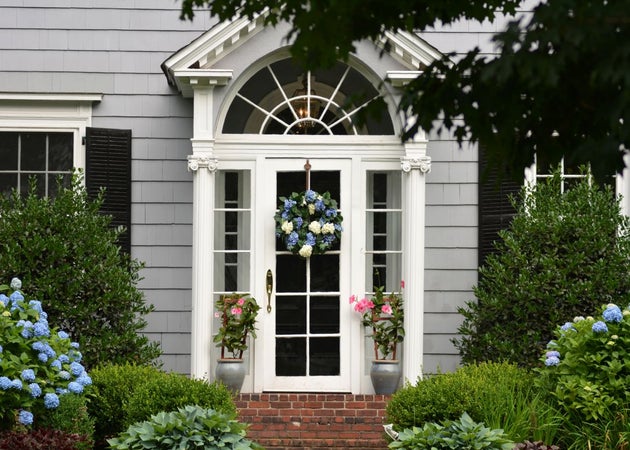
Virginia’s geographic diversity can leave homeowners vulnerable to several types of property damage. The coastal Tidewater region faces exposure to hurricanes, storm surges, and flooding. At the same time, inland areas may experience severe storms and winter weather, while the Blue Ridge region sees mountain risks, such as high winds.
Understanding your home insurance policy and the different types of coverage within it can help you better protect your investment and be prepared should you ever need to file a claim.
Virginia home insurance requirements
Virginia state law does not require homeowners insurance, but it’s a wise move to carry it anyway. And if you have a mortgage, your lender will likely require coverage. If you fail to secure your own coverage or let your policy lapse, your lender may purchase force-placed insurance on your behalf, which tends to cost more and protect less.
How does homeowners insurance work in Virginia?
This short video walks you through how to get a quote and what insurance covers. Click a topic on the video to jump straight to what matters most to you.
What does home insurance include in Virginia?
Standard home insurance policies include several elements that cover different parts of your property. Understanding how these work together can help you choose the right limits and identify any gaps you need to bridge through policy add-ons (called endorsements) or separate coverage types.
Dwelling coverage (Coverage A)
Dwelling coverage protects the structure of your home, including:
-
Walls, ceilings, and floors
-
Roof
-
Built-in systems like electrical and HVAC
-
Attached structures like garages and decks
You should carry enough Coverage A to rebuild your home following a total loss. This is called its replacement cost, and it differs from the home’s market value, which factors in the land and other characteristics like location and real estate market trends.
In Virginia, where labor and material costs can fluctuate, it’s worth considering extended replacement cost coverage, which provides additional funding if rebuilding costs exceed your policy limits (the maximum your insurer will pay out).
Other structures coverage (Coverage B)
Other structures coverage applies to building and other things on your property that aren’t attached to your home, such as:
-
Detached garages
-
Sheds and barns
-
Fences
-
Boat houses
-
Permanently installed or anchored docks
Note: Standard policies typically do not extend to other structures on your property that you use for business purposes. For that, you’d need to add coverage.
Your Coverage B policy limit is usually set to 10% of your dwelling coverage. So if you have $350,000 in dwelling coverage, you might have $35,000 in other structures coverage. You can typically adjust coverage to fit your needs.
Personal property coverage (Coverage C)
Personal property coverage helps pay to replace your belongings after a qualifying loss. Items covered include but aren’t limited to:
-
Furniture and decor
-
Clothing
-
Electronics
-
Appliances
-
Jewelry (though most policies cap this category around $2,500 regardless of what your pieces are worth)
-
Tools
-
Sports and hobby equipment
Your Coverage C limit might be auto-set to 50% of your dwelling limit, though you can typically increase this amount if you have higher-value belongings.
Pro tip: Many policies default to actual cash value (ACV) coverage, meaning a claim payout for a covered loss will reflect the depreciated value of your belongings. Consider adding replacement cost coverage, which will reimburse you for the cost to replace damaged or stolen items with new, similar versions based on today’s prices.
Learn more: Actual cash value vs. replacement cost coverage
Loss of use coverage (Coverage D)
Loss of use coverage, also called additional living expenses or ALE, helps cover costs you might incur if your home becomes uninhabitable after a covered loss or a mandatory evacuation. Covered expenses might include:
-
Hotel stays or temporary rental housing
-
Food costs (e.g., restaurants if you can’t cook at home)
-
Laundering clothes
-
Extra transportation or commuting costs
-
Pet boarding fees
-
Storage costs for belongings
-
Utility setup/connect fees at temporary housing
Loss of use coverage in Virginia typically defaults to 20% of the policy’s dwelling coverage limit.
Liability and medical payments coverage (Coverages E and F)
Most of your policy protects your physical property, but Coverage E and F are designed to financially protect you under specific circumstances:
-
Personal liability coverage protects you financially if you or a member of your household is responsible for someone else’s injury or property damage. A $100,000 limit is standard, but you may want to increase coverage based on the value of your assets.
-
Medical payments coverage helps pay for minor injuries to guests, regardless of fault. Limits are generally $1,000 to $5,000.
Perils and exclusions in Virginia: What is covered and what is not?
Homeowners insurance in Virginia protects you against costs from sudden, unexpected damage caused by specific events, called perils in industry-speak.
-
Open-peril policies cover all causes of damage except those specifically excluded in policy documentation.
-
Named-peril policies only cover damage-causing events specifically named in the policy documentation. Damage caused by all other losses is excluded. There are 16 commonly covered named perils, including fire, lightning, wind and hail, explosions, vandalism, and theft.
Standard home insurance policies, known as HO-3s, usually cover your dwelling (home) on an open-peril basis and your personal belongings on a named-peril basis.
Common exclusions in Virginia
All standard home insurance policies in Virginia exclude coverage for the following:
-
Flooding: Standard policies do not cover damage from rising water, including flooding from heavy rain, storm surge (when a hurricane or strong storm pushes ocean water inland), or overflowing bodies of water. Areas where this may be a particular concern include Hampton Roads and Northern Virginia, where intense rainfall and urban runoff can cause flooding. To be covered for flood damage, you’ll need to add a flood insurance endorsement to your home insurance or purchase a separate flood policy.
-
Earthquakes: Earthquake damage is explicitly excluded from standard policies. While Virginia isn’t known for frequent seismic activity, the 2011 quake in Mineral, Virginia, caused widespread damage and called attention to the state’s underlying risk. Because of this, some homeowners choose to add an earthquake endorsement to their policy.
-
Nuclear and war: Homeowners insurance excludes damage caused by nuclear hazards, war, or government action.
-
Termite and pest damage: Virginia is considered a moderate to heavy termite risk state. However, termite and pest damage is considered a maintenance issue and not covered by homeowners insurance.
Additional home insurance coverage to consider in Virginia
In addition to flood insurance, you might also consider the following endorsements to broaden your policy’s protection.
Water backup and sump pump overflow
Water backup coverage protects against damage caused by sewer backup or sump pump failures, which is not covered by standard policies. This coverage can be especially valuable in Virginia, where coastal storms can overwhelm drainage systems, and heavy summer rains in the northern part of the state can lead to localized flooding.
Service line coverage
Service line coverage helps pay for repairs to underground utility lines that run from the street to your house, including water, sewer, electrical, or gas lines. This is particularly useful in historic areas such as Alexandria or Richmond, where aging infrastructure can lead to line failure.
Equipment breakdown coverage
Equipment breakdown coverage protects your home’s major systems and appliances from sudden mechanical or electrical failure. This can help cover issues affecting HVAC systems and electrical components, such as panels and wiring. It fills a gap in standard policies, which typically only cover damage from external events, not internal breakdowns.
Ordinance or law coverage
Ordinance or law coverage helps pay to rebuild to current codes following a covered loss. Standard policies don’t typically cover additional costs to meet current code requirements. This endorsement can be a good choice if you have an older, historic house or live in an area that has seen recent building code updates.
Virginia insurance laws and consumer protections
Several consumer protections introduced by Virginia legislators in recent years aim to stabilize the insurance market and protect Virginia homeowners.
-
Asphalt shingle roof law (HB 677/SB 402): The asphalt shingle roof law limits how Virginia insurers may consider the age or condition of an asphalt-shingle roof in underwriting decisions. Insurers generally may not refuse coverage, cancel, nonrenew, or increase premiums solely because of the age or condition of an asphalt-shingle roof, except under certain specified circumstances, such as when the roof is not in good repair or otherwise poses an increased risk
-
Nonrenewal notice requirements: Virginia law generally requires homeowners insurance companies to provide advance written notice before nonrenewing a policy. For owner-occupied homeowners policies, insurers typically must provide at least 30 days’ notice before the policy’s expiration date.
The cost of home insurance in Virginia
The average cost of a Kin homeowners policy* in Virginia is $1,136 for $350,000 in dwelling coverage. However, how much you pay for home insurance in Virginia will depend on several factors, including the home’s age and replacement cost, your claims history, the deductible you choose, and policy add-ons you select.
Where you live in Virginia also has a major impact on your premium.
-
Lower-cost inland areas such as Winchester and Blacksburg tend to have lower rates, since they are less exposed to coastal storms.
-
Coastal areas, including Virginia Beach and Norfolk, may see higher premiums due to hurricane risk, potential storm surges, and flooding.
-
Northern Virginia, including Fairfax and Loudoun counties, may also see higher rates due to elevated home values and higher reconstruction costs.
Average cost of Virginia homeowners insurance from Kin
|
Dwelling coverage limit |
Average policy cost |
|
$350,000 |
$1,136 |
|
$500,000 |
$1,623 |
|
$750,000 |
$2,434 |
|
$1,000,000 |
$3,246 |
Average premiums for Kin home insurance customers as of May 2026.
How to save on your Virginia home insurance premium
Although the average cost of homeowners insurance in Virginia is lower compared to several other states, you may be able to save even more by taking these steps:
Impact-resistant roofing
Upgrading your roof with impact-resistant materials can help protect your home during severe storms, thereby lowering your risk of a costly claim after a storm or other weather event. Many insurers offer roofing discounts for that reason.
Bundling policies
Purchasing more than one policy from a single company, called bundling, can lead to a discount from many insurers. Bundling insurance policies, such as your home and auto, also means less paperwork and a simpler way to manage all your insurance needs.
Protective devices
Installing safety features can also lead to a discount. Common qualifying devices include:
-
Monitored security systems
-
Smoke and fire alarms
-
Water leak detection systems
Choosing the right deductible
When purchasing homeowners insurance, choose your deductible carefully. Your deductible is the amount of damage you agree to cover out of pocket. A higher deductible can lower your premiums (your insurance bill), but you'll have more out-of-pocket expenses following a claim. A lower deductible will lead to higher premiums, but you'll pay less in the event of a covered claim.
Hurricane and wind/hail deductibles in Virginia
In some parts of Virginia, especially along the coast, home insurance may include separate deductibles for hurricanes or wind and hail damage. Specific events can trigger wind and hail deductibles:
-
Named storm deductible: Applies when the National Weather Service or National Hurricane Center officially names a storm (like Hurricane Helene).
-
Hurricane deductible: Applies when a storm is declared a hurricane, typically when sustained winds reach 74 mph or higher.
Percentage-based vs. flat-dollar deductibles
After a covered loss, your insurer will issue a claim payout minus your deductible. Though deductibles are often flat-dollar amounts, such as $1,000, they can also be percentage-based, such as 2% of your dwelling coverage. Hurricane and wind/hail deductibles are often percentage-based.
Example following a $15,000 claim:
-
A flat $1,000 deductible: Your insurer will subtract $1,000 from your claim payout, and you’ll receive $14,000.
-
A 2% hurricane deductible on a $300,000 policy: Your insurer will deduct $6,000 (2% of $300,000) from your claim payout, and you’ll receive $9,000.
How to navigate a Virginia insurance renewal
Reviewing your policy before it renews can help ensure your policy still meets your coverage needs and that you’re getting the best coverage at a fair price. A few simple steps can help you maintain coverage and even save you money.
The “re-shop” strategy
It can be smart to compare quotes from several insurers before renewal time, especially after certain events, such as moving or making major updates to your property. Re-shopping can help you identify more competitive pricing and make sure your policy still meets your needs. Even if you choose to stay with your current insurer, having updated quotes gives you a clearer picture of your insurance situation.
Documenting upgrades
Keep records of any upgrades or changes you make to your home, especially with Virginia’s recent changes to roof-related protection. If you’ve replaced and/or upgraded your roof, installed a new HVAC system, or upgraded electrical or plumbing systems, document and share that information with your insurer.
Virginia Property Insurance Association (VPIA) FAIR Plan
If you are unable to find coverage through the standard insurance market, the Virginia Property Insurance Association (VPIA) FAIR Plan serves as an insurer of last resort.
The VPIA offers basic coverage against fire and lightning claims, but policies don’t typically include the broader protections you would find in standard coverage. Because of this, homeowners may purchase FAIR Plan insurance along with a “wraparound” policy (sometimes called a difference-in-conditions policy), which fills in the gaps and provides more robust coverage, such as adding personal liability insurance.
Frequently asked questions about Virginia home insurance
Does homeowners insurance cover termites in Virginia?
Most standard Virginia homeowners insurance policies do not cover termite damage. Insurers consider termites and other pests a preventable maintenance issue, rather than a sudden or accidental loss. As the homeowner, you are expected to manage regular inspections, moisture control, and, if needed, a termite control contract with an exterminator.
What is the new Virginia roof age insurance law?
Virginia Senate Bill 402 is a new law designed to prevent homeowners from losing coverage solely because of the age of their roof. Under this legislation, insurers generally can’t cancel or nonrenew a policy based on the age of the roof. However, if an aging roof is in poor condition or shows visible damage, your insurer may require an inspection or documentation to confirm that the roof is still in good condition.
Is flood insurance required for coastal homes in Virginia?
Virginia law does not require homeowners to carry flood insurance. Still, it can be a wise investment, especially if you live in the state’s coastal regions. In some cases, if a home is in a high-risk flood zone, your mortgage lender may require flood insurance. Note that even small bodies of water, such as streams or drainage ditches, can overflow, cause flooding, and result in extensive property damage.
How does a hurricane deductible work in VA?
Virginia hurricane deductibles are typically a separate, percentage-based deductible that applies if a named hurricane or tropical storm causes damage to your home. Instead of paying a flat dollar amount, such as $1,000, a hurricane deductible is likely to be a percentage of your dwelling coverage. A 2% hurricane deductible on a $300,000 policy, for example, would mean you must pay $6,000 out of pocket before your insurance kicks in after a hurricane.
What is the Virginia Property Insurance Association (VPIA)?
The Virginia Property Insurance Association (VPIA) is Virginia’s insurer of last resort for homeowners who cannot get coverage in the standard insurance market because their home is considered too high-risk, such as those in coastal regions where the likelihood of hurricanes and other severe weather events is high. VPIA policies may be more limited than standard homeowners insurance, requiring supplementary coverage to ensure full protection.


